
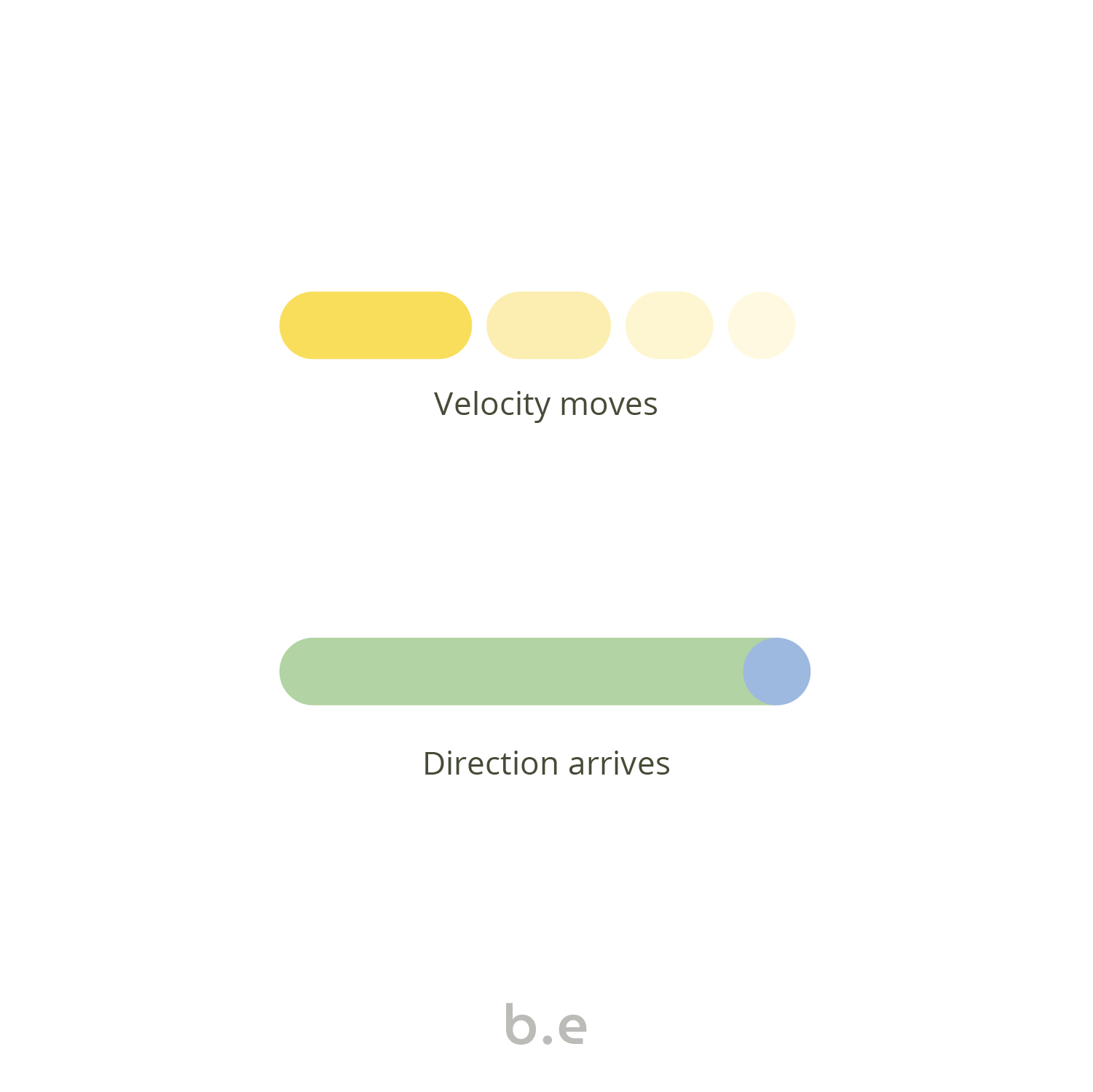
VELOCITY MOVES. DIRECTION ARRIVES.
Moving quickly and moving intentionally are not mutually equal.
Modern work often rewards movement.
Emails are answered.
Meetings are attended.
Projects advance.
Decisions are made.
Calendars remain full.
And at the end of the day, it can feel satisfying to know that many things happened.
Yet movement alone does not always create progress.
Sometimes we move quickly because demands continue appearing.
Because others are waiting.
Because momentum feels easier than pausing.
Because slowing down can feel uncomfortable.
And because activity itself can become evidence that we are contributing.
Over time, it can become difficult to distinguish between moving efficiently and moving intentionally.
We complete tasks.
Respond promptly.
Check items off lists.
And still find ourselves wondering why our efforts do not always feel meaningful or aligned with what matters most.
Direction asks different questions.
Not simply:
"What needs my attention next?"
But also:
"What am I trying to move toward?"
"Does the pace I am keeping allow me to notice when my path has changed?"
Moving quickly and moving intentionally are not mutually equal.
One measures movement.
The other measures alignment.
One can create momentum.
The other helps us arrive somewhere that feels worthwhile.
There may be seasons when speed is necessary.
Deadlines emerge.
Opportunities appear.
Circumstances shift.
But sustaining velocity without periodically examining direction can leave us traveling far without feeling meaningfully closer to where we hoped to be.
Sometimes progress is not found in doing more.
Sometimes it begins by pausing long enough to remember what we intended to move toward in the first place.
STAY CURIOUS