
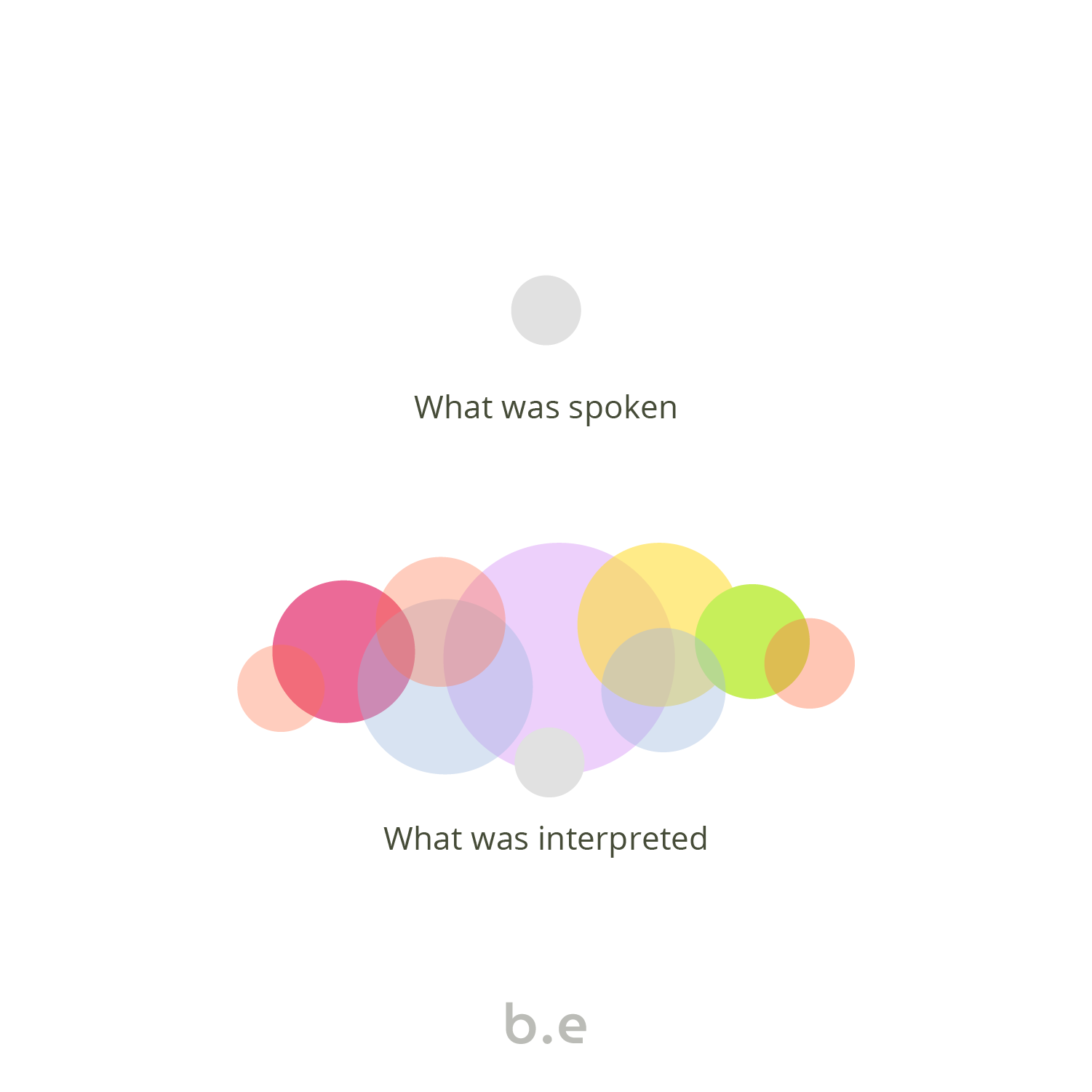
WHAT IS SPOKEN IS NOT ALWAYS WHAT IS INTERPRETED
Some work requires us to constantly interpret what was never clearly communicated.
Communication often appears simple.
A conversation happens.
An email is sent.
Feedback is shared.
A request is made.
A meeting concludes.
And from the outside, it can seem as though information has been exchanged and understanding naturally follows.
Yet understanding itself often requires work.
Sometimes we reread messages.
We replay conversations.
We wonder what someone meant.
We consider whether expectations were implied rather than stated.
We seek reassurance before moving forward.
And occasionally, we find ourselves spending more energy trying to understand what is expected of us than actually contributing to the work itself.
Interpretation is influenced by many things.
Past experiences.
Relationships.
Context.
Assumptions.
Uncertainty.
Even our emotional state in a given moment.
Two people may hear the same words and leave carrying entirely different understandings.
Some ambiguity can be valuable.
It allows room for exploration.
Experimentation.
Discovery.
But when interpretation becomes a frequent requirement rather than an occasional experience, work can begin to feel heavier than it appears.
Questions remain open longer.
Decisions take more effort.
Confidence becomes more difficult to access.
And energy that could have been directed toward creating, contributing, or connecting is instead spent trying to make sense of what was never fully communicated.
What is spoken is not always what is interpreted.
Sometimes the work beneath the work is simply understanding what others intended us to hear.
STAY CURIOUS